

This case is based on an authorised project record. The listed company’s name, incorporation year, specific business lines and project documents have been further generalised. Timing, absence of supplementary requests and later registration outcomes reflect this matter only and do not promise a filing or approval result.
Background
In late 2025, an A-share-listed company in the urban-services and public-utilities sector (“Company A”) planned to establish a wholly owned Hong Kong subsidiary as an overseas business coordination and investment platform. The project required the company to align internal decisions, NDRC and commerce-related ODI filings, foreign-exchange registration preparation and Hong Kong incorporation.
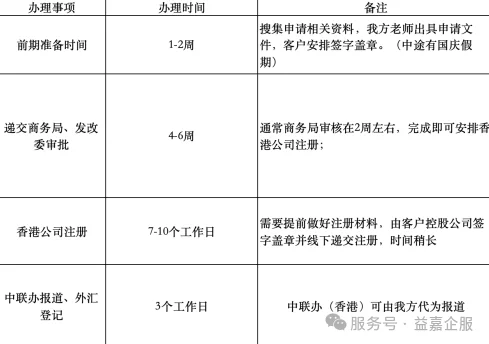
A listed company has heightened requirements for disclosure, procurement, board decisions, source of funds and consistency across filing materials. The initial project plan allowed approximately three months. The team therefore identified workstreams that could proceed in parallel without reducing document quality.
Client priorities

- Timing: whether the relevant procedures could be completed within the company’s three-month planning window.
- Filing stability: how to reduce the risk of rejected or supplemental materials and manage the impact on disclosure timing.
- Document preparation: which filing documents the advisory team could prepare and where management and functional teams had to provide, confirm and execute information.
- Fees and procurement: whether government charges, professional fees, Hong Kong incorporation and continuing maintenance could be separated clearly.

Service approach
Build a parallel work plan
Internal approvals, NDRC filing, commerce filing, foreign-exchange preparation and Hong Kong incorporation were broken into verifiable milestones. Tasks that had to be sequential were separated from those that could run in parallel. The project team reported progress, decisions outstanding and risk regularly; it did not substitute a fixed deadline for authority review.
Pre-submission and consistency review
Before formal filing, the team cross-checked entity information, investment amount, source of funds, project purpose, ownership path and Hong Kong subsidiary details. Board documents, the feasibility study, public disclosures and filing statements also had to remain consistent. The review reduced obvious omissions and supplementation risk, but could not guarantee that an authority would raise no further questions.
Define responsibilities
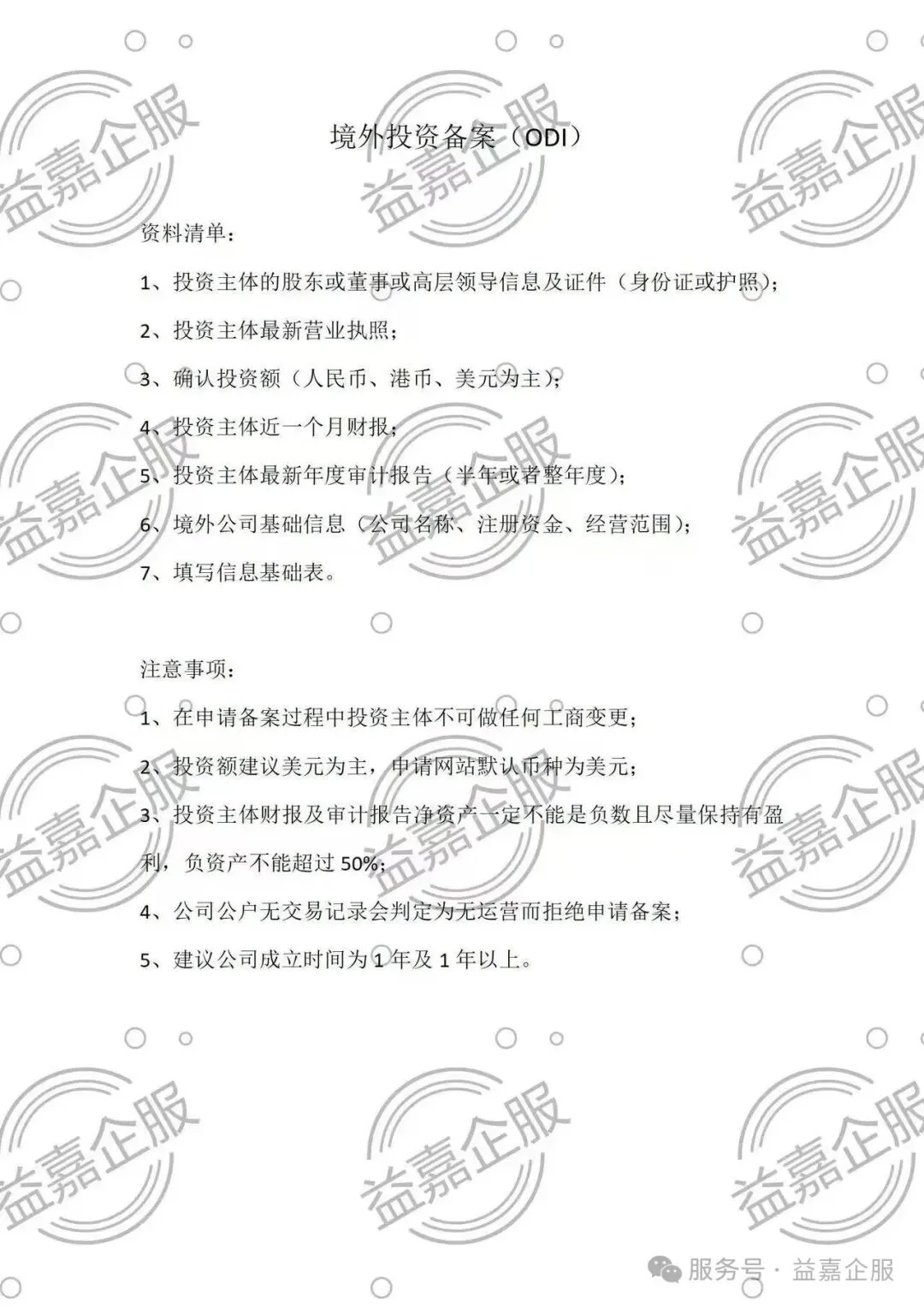
The client provided its business licence, audit report, intended internal decisions, project description and source-of-funds information, and completed board, seal and signature procedures at the required milestones. Using the confirmed information, the advisory team assisted with:
- application forms and explanations for the outbound-investment project;
- the outbound-investment feasibility materials;
- the source-of-funds explanation;
- the Hong Kong subsidiary’s articles, incorporation and supporting documents; and
- a consistency checklist across the different filing workstreams.
Transparent fees and post-filing coordination
The quotation separated government charges, advisory services, Hong Kong incorporation and continuing maintenance so the listed company could follow its procurement and budget process. Banking, foreign-exchange, overseas reporting and other possible post-filing steps were also identified. Obtaining one filing document was not presented as completion of every cross-border implementation step.
Outcome

- The project record states that the relevant filings and Hong Kong incorporation were completed in fewer than three weeks from confirmation of the requirement, faster than the company’s approximately three-month planning window.
- No returned-supplement request was recorded for the materials submitted in this case. The outcome was associated with document readiness, prompt client decisions and authority processing at the time.
- The wholly owned Hong Kong subsidiary was incorporated and the applicable post-filing and implementation steps for this matter were coordinated.
- The project produced an internal archive linking decisions, filings, receipts and fees for the listed company.
Lessons from the case
- ODI is not a single form. It is a consistency exercise across internal governance, outbound-investment filings, foreign exchange and the offshore entity.
- A listed company should coordinate board and disclosure timing early so the business plan, public disclosure and filing materials do not diverge.
- A timetable should distinguish company preparation time from authority review. Parallel work can improve efficiency but cannot replace scrutiny.
- “Accepted without supplementation” was the outcome in this case; it does not exempt another project from questions, verification or approval conditions.
This content is not outbound-investment, securities-disclosure, foreign-exchange, legal or tax advice. ODI applicability, filing authorities, funding route and later procedures depend on the investor, amount, sector, destination and current regulatory practice.