

This case is based on an authorised project record and has been further anonymised. Tax, penalties, interest, approvals and deregistration timing reflect the individual matter only; the authorities may reach different decisions on different evidence.
Background
In early 2025, a Shenzhen-based cross-border ecommerce operator (the “client”) sought assistance after a Hong Kong company received a tax investigation letter. The company was incorporated in April 2022 to receive ecommerce platform sales proceeds and pay suppliers. It operated for approximately eighteen months before trading ceased and the bank account became largely inactive. The client incorrectly assumed that “no operations” meant that no further compliance work was required, so accounting, audit and tax filing obligations were left outstanding.
In January 2025, the Inland Revenue Department asked for audit reports and profits tax returns for the three years from 2022 to 2024, together with an explanation for the delay. The client wanted to resolve every outstanding tax matter and then close the company through a verifiable process.
Compliance context and concerns
Even when a Hong Kong company stops trading, corporate and tax obligations will generally continue until it is formally deregistered. When a profits tax return is issued, the company will normally need to file the return and audit material requested, unless it qualifies for an applicable exemption such as dormant status and has completed the relevant procedures. Prolonged non-response can lead to estimated assessments, penalties, summonses or other enforcement.

The client’s main concerns were:
- whether tax, penalties and interest accumulated over several years could be contained;
- whether the director might face a summons or personal exposure;
- how long it would take to conclude the affairs of a company that had stopped trading; and
- whether historical matters could still be pursued or the company restored after deregistration.
Approach
Step 1: due diligence and account reconstruction
The team obtained bank statements from incorporation and reviewed approximately 500 transactions, business contracts, purchase invoices and logistics documents. The project record showed:
- approximately HK$8 million in revenue, HK$7 million in costs and HK$1 million in profit in the first financial year;
- a gradual cessation of business from the second year, with substantially no operations in the following two periods; and
- a need to re-match some platform records, bank receipts and supplier evidence.
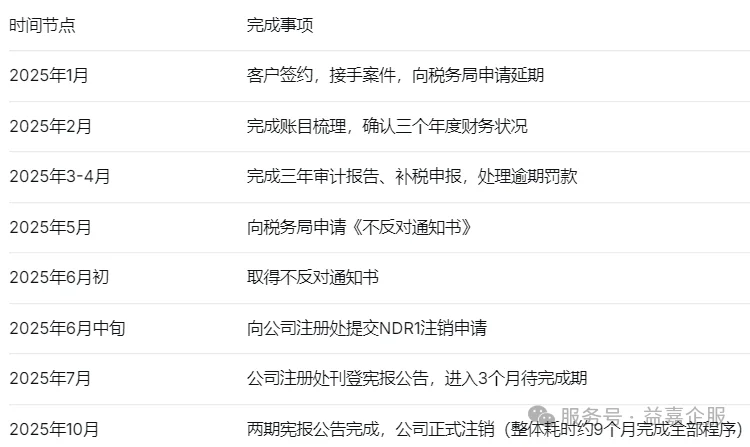
The team also told the IRD that the company was reconstructing its historical accounts and requested more time. The case record indicates that approximately three months were allowed for preparation.
Step 2: complete three years of audits and late filings
The accounting and audit work took more than one month:
- First financial year: statements were prepared using approximately HK$8 million of revenue and HK$1 million of profit. The project record notes profits tax of approximately HK$165,000.
- Following two years: statements and audit material reflected the bank and business evidence showing substantially no operations, with nil assessable profit recorded.
- Explanation and payment: the late returns were accompanied by an explanation of when trading ceased, the misunderstanding of continuing obligations and the voluntary correction. Tax and amounts assessed by the authority were paid.
The case materials record approximately HK$4,200 in late-filing penalties and separately note approximately HK$8,000 in late-payment interest. Because the source article contained a duplicated edit around the interest figure, any publication or later reliance should treat the IRD payment notices and audit file as the final evidence.
Step 3: obtain the notice of no objection and apply for deregistration
After the known filings and payments had been addressed, the team proceeded as follows:
- Apply to the IRD for a notice of no objection to deregistration, with payment and audit-completion evidence. The case record shows that the notice was obtained after approximately four weeks.
- File the applicable deregistration documents with the Companies Registry. The statutory fee recorded for the case was HK$420.
- Allow the statutory objection period after publication in the Gazette. No objection was recorded in this case.
- Following the later Gazette notice in July 2025, the company was deregistered from the register.
Was dormant status an alternative?
A business that is only pausing transactions and expects to restart may assess dormant-company status. A qualifying company that completes the procedure may receive certain accounting and audit exemptions, but corporate registration and tax obligations—including responses to returns that are issued—still require case-specific confirmation. Here, the client did not intend to use the entity again, so remediation followed by deregistration was selected.
Outcome
- Three years of accounts, audit reports and tax filing materials were completed and submitted.
- Tax, penalties and interest recorded for the case were paid.
- The IRD issued a notice of no objection.
- After the objection period, the company completed deregistration in July 2025.
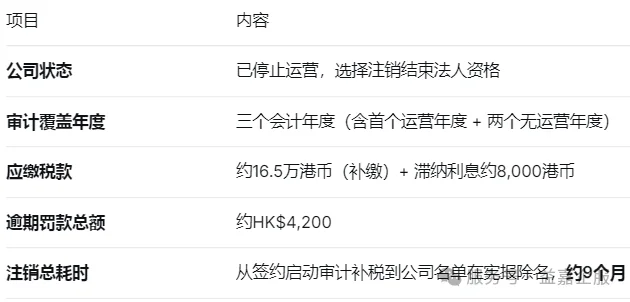
Deregistration of a Hong Kong company normally takes several months. Tax review, missing filings, unpaid amounts, liabilities and the statutory Gazette period all affect timing. Deregistration also does not automatically extinguish every historical liability: the company may be restored in statutory circumstances, and any personal exposure of directors or other persons depends on the facts.
Lessons from the case
- Stopping business does not automatically end corporate and tax obligations. Government correspondence must continue to be handled until the entity is formally concluded.
- Before deregistration, a company should inventory outstanding audits, tax returns, annual compliance, liabilities and assets to avoid delay or rejection.
- After a tax enquiry, preserving evidence, responding on time and making a truthful correction can help the authority understand the facts but does not guarantee penalty relief.
- Dormant status and deregistration serve different business purposes and are not interchangeable.
This content is not audit, legal or tax advice. Penalties, audit scope, dormant-company eligibility and deregistration conditions must be assessed under current law, authority documents and the facts of the case.