

This case is based on an authorised project record and has been further anonymised to remove identifying personal and corporate details. Timelines, fees and authority outcomes apply only to this matter and are not promises for other engagements.
Background
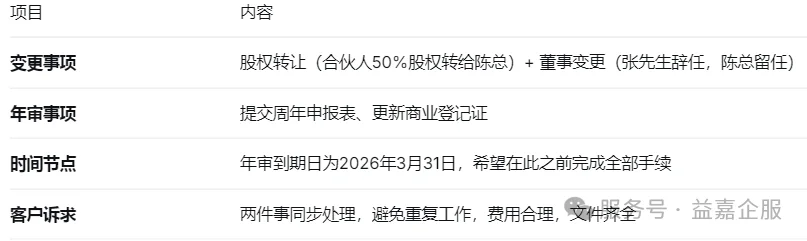
In early 2026, a Shenzhen-based cross-border ecommerce operator (the “client”) needed to acquire the remaining 50% of a Hong Kong company after a business partner decided to leave. The outgoing partner would also cease to act as a director. Fewer than two months remained before the annual return deadline. The client was concerned that completing the changes first could put the deadline at risk, while filing first might lead to duplicated document work.
The company had been incorporated in 2024 by two shareholders. Its registered capital was HK$10,000; each shareholder held 50% and both served as directors. Following the transaction, the client would become the sole shareholder and sole director.
Issues to resolve together
- Deadline coordination: transfer documents, stamping and corporate filings all required lead time, while the annual return had a fixed deadline.
- Sequence: the team needed to compare “change first, file later” with “file first, change later”.
- Stamping: the valuation basis, instruments, allocation of cost and submission timing had to be confirmed.
- Execution and records: board and shareholder documents, transfer instruments, director changes and statutory records had to be planned as one workstream.
Approach
The team prepared the change documents and annual-return materials in parallel, but submitted them in stages. The share transfer and director change were completed first, followed immediately by the annual return using the updated corporate information. This was a case-specific decision based on the time remaining, document readiness and expected authority processing times.
Step 1: compare the two sequences
- Change first, file later: the annual return can reflect the new shareholder and director information, but a delayed change could compress the filing timetable.
- File first, change later: the annual-return deadline is addressed earlier, but statutory records and related registration information may need a second round of updates.
Once timely execution was confirmed, the first sequence was selected. A near-final annual return was prepared in parallel so it could be submitted as soon as the changes were complete.
Step 2: share transfer and director change
The share value was reviewed using internal financial information as at 31 December 2025. The case record showed paid-in funds of approximately HK$5,000 and accumulated profit of approximately HK$1,000, giving an estimated net asset value of HK$6,000. The transfer consideration was HK$5,000. These figures supported the case-specific stamping estimate; the formal basis remained subject to the applicable rules and the evidence accepted by the authority.
The document work included:
- a share-transfer agreement and instruments of transfer;
- board and shareholder approvals for the transaction and director change;
- updates to the registers of members and directors and the share certificates; and
- the forms and notices applicable to the director change filed with the Companies Registry.
At the time of the case, transfer stamp duty was estimated using the higher of the consideration and the share value, together with fixed stamping on the relevant instruments. On a HK$6,000 basis, the project record showed approximately HK$17 in total, shared as agreed by the parties. Rates, minimum charges and instrument requirements can change and must be checked for each transaction.
Preparation started on 5 February. The record shows that the changes were completed by 21 February and reflected in the company records. The client then became the sole shareholder and sole natural-person director. The team also checked the minimum director, company secretary and continuing-compliance requirements for a private company.
Step 3: annual return and related updates
After the changes, the annual return was prepared and submitted using the latest shareholder and director information. The team also reviewed whether the business registration particulars, significant controllers register, banking records and operating documents required corresponding updates. The case record notes a HK$105 annual-return fee and approximately HK$250 in other registration-document costs. These are historical case figures, not a current government-fee schedule or fixed quotation.
The annual return was submitted on 25 February and the related document updates were completed around 5 March.
Outcome
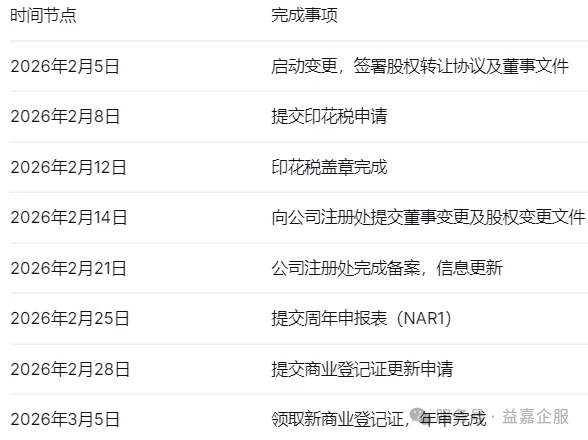
- The change and related annual-compliance work took approximately four weeks from commencement.
- The share transfer, director change and internal statutory records were updated.
- The annual return was filed before the original deadline; the case record shows no late filing surcharge.
- The client reported that parallel preparation reduced repeated requests for documents and cross-agency coordination.
Lessons from the case
- A share transfer and annual return can be prepared in parallel, but the submission sequence should reflect the time remaining, signing logistics and authority processing times.
- A transfer of shares in an unlisted Hong Kong company will generally involve stamping. The basis and documents cannot be assessed solely by reference to the nominal price.
- Shareholder and director changes require more than external forms: statutory registers, share evidence and relevant operating records should also be updated.
- A sole shareholder may also act as the sole natural-person director where the Companies Ordinance and the articles permit, but the company secretary and other continuing obligations remain separate requirements.
This is general case information, not legal, tax or investment advice. Any share transfer, stamping or annual-return plan must be reviewed against the facts and rules in force at the relevant time.